
Fissure Treatment
Enquiry Form
What Is an Anal Fissure? Expert Anal Fissure Treatment at MIRA Health Care
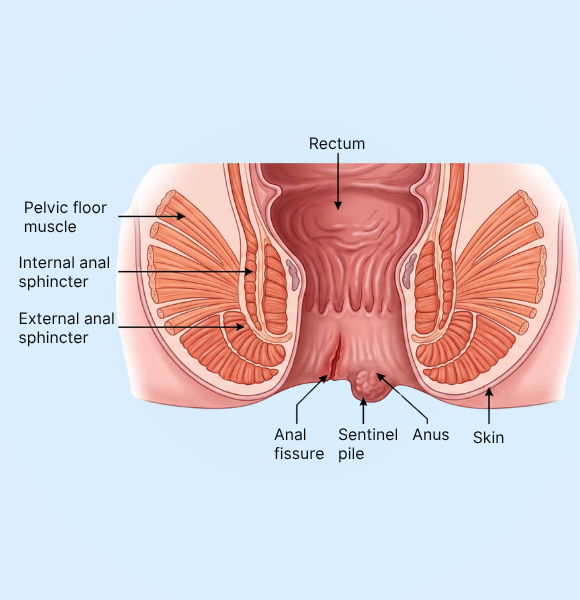
An anal fissure is a small tear, cut or crack in the lining of the anal canal. It commonly occurs due to the passage of hard stools, persistent constipation, chronic diarrhoea or excessive straining during bowel movements. An anal fissure can cause severe pain during and after passing stools and may be accompanied by bright red bleeding, itching or a burning sensation around the anus.
At MIRA Health Care, our experienced proctologists specialise in the diagnosis and treatment of anal fissures, offering advanced, minimally invasive treatment options to relieve pain, promote healing and help prevent recurrence.
Symptoms

Visible tear in skin around anus

Painful defecation while passing stools and post-defecation. Pain is a pricking or searing type and can last up to hours

Bleeding (streak of blood) on stools or blood on the tissue paper

A skin tag-like growth can be felt at the edge of the fissure called a sentinel pile

Need to strain while passing stools due to anal sphincter spasm

Pruritus ani – Itching in the anal region

Malodorous Discharge
Causes
Passing large or hard stools due to constipation
Diarrhoea – repeated bowel movements cause tearing of the anal skin
Childbirth
Crohn’s disease, leukaemia, tuberculosis
Sexually transmitted diseases like Syphilis
Viral infections like Herpes
Decreased blood flow to anorectal area
Overly tight or spastic anal sphincter muscles
Anal Cancer
Anal sex
Latrogenic – A tear during insertion of a rectal thermometer, USG probe, endoscope, enema tube
Types
Fissure can be present in men, women or even infants
Acute Fissure
- Fissure that is less than 6 weeks old
Chronic Fissure
- Fissure that is more than 6 weeks old.
Sentinel Pile
- Sentinel pile: Chronic fissure that is hard to feel and has a skin tag-like growth near the fissure.
Diagnosis
History of Symptoms
External Examination
Advanced Anal Fissure Treatment at MIRA Health Care
At MIRA Health Care, we offer advanced treatment options for anal fissures, ranging from conventional surgery to minimally invasive laser procedures. The choice of treatment depends on the severity of the fissure, the duration of symptoms and the patient’s overall health. Our experienced proctologists provide personalised care to ensure effective healing, long-term relief and a faster return to normal activities.
Conventional Anal Fissure Surgery
Conventional surgery is recommended for chronic anal fissures that do not respond to medications, dietary changes or other conservative treatments. The most commonly performed procedure is Lateral Internal Sphincterotomy (LIS), which involves making a small incision in the internal anal sphincter muscle.
This helps reduce muscle spasm, improves blood flow to the affected area and promotes faster healing of the fissure. The procedure has a high success rate and provides long-term relief for patients with persistent or recurrent anal fissures.
Laser Anal Fissure Treatment
Laser treatment for anal fissures is an advanced, minimally invasive procedure that offers effective relief with minimal pain, reduced bleeding and quicker recovery compared to conventional surgery. At MIRA Health Care, our experienced laser surgeons perform this safe and effective day-care procedure using advanced laser technology.
Laser fissure treatment is performed under local anaesthesia and does not require large incisions or stitches. Most patients can return home on the same day and resume their normal activities much sooner, with minimal post-operative discomfort. The precision of laser technology also helps minimise tissue damage, reduces the risk of complications and promotes faster healing.