
Pilonidal Sinus Treatment
Enquiry Form
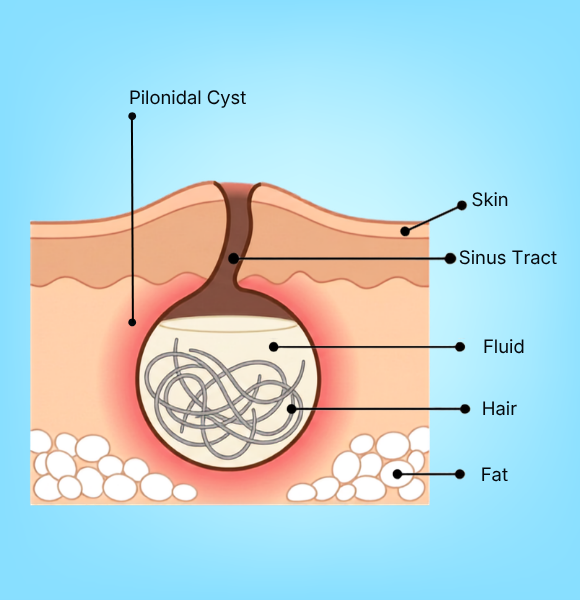
Pilonidal Sinus (PNS): Causes, Symptoms and Treatment
A pilonidal sinus (PNS) is a small tunnel or cavity that develops in the skin, usually at the top of the buttock crease (natal cleft). It may fill with fluid or pus, leading to the formation of a cyst or abscess. A pilonidal cyst often contains hair, dead skin cells and other debris.
A pilonidal sinus can cause significant pain and discomfort and is prone to infection. When infected, it may produce pus or blood, accompanied by swelling, redness and a foul-smelling discharge.
A pilonidal sinus most commonly affects young adults, particularly men. It is also more common in individuals who spend prolonged periods sitting, such as drivers and office workers.
Symptoms
Pain when sitting or standing

Swelling around the cyst or affected area

Redness, tenderness or soreness of the skin around the affected area

Pus or blood draining from the abscess, often accompanied by a foul-smelling discharge

Hair protruding from the affected area or lesion

The formation of multiple sinus tracts or openings in the skin
Causes
The exact cause of this condition isn’t known
Its cause is believed to be a combination of changing hormones, hair growth, and friction from clothes or from spending a long time sitting.
It occurs after puberty
Activities that cause friction, like sitting, can force the hair growing in the area to burrow back under the skin.
The body considers this hair foreign and launches an immune response against it.
Similar to how it would react when dealing with a splinter. This immune response forms the cyst around your hair.
Sometimes a person may have multiple sinuses that connect under the skin.
Complexity
Several complications may arise from PNS. These include wound infection and a recurrence of the PNS even after surgery.
Signs that the wound is infected include:
- Severe pain.
- Inflamed & Swollen skin.
- A temperature of 100.4°F or higher.
- Blood and Pus seeping from the wound site.
- A foul odour coming from the wound.
Prevention:
- You can prevent recurrence of PNS by washing the area on a daily basis with a mild soap, making sure all soap is removed.
- Keeping the area completely dry.
- Avoiding sitting for long periods.
How Are Pilonidal Sinuses Treated?
At MIRA Healthcare, the treatment for a pilonidal sinus (PNS) depends on the severity of the condition, the presence of infection and whether it is a first-time or recurring problem. Our experienced surgeons recommend the most appropriate treatment based on your individual condition.
Conservative Treatment
If your condition is diagnosed at an early stage and you are not experiencing severe pain or significant inflammation, your doctor may recommend conservative treatment. A broad-spectrum antibiotic may be prescribed to treat the infection and relieve discomfort. While antibiotics help control the infection, they do not eliminate the sinus tract itself.
Your doctor may also advise you to:
- Attend regular follow-up examinations.
- Keep the affected area clean and maintain good personal hygiene.
- Regularly remove hair or shave the area to reduce the risk of recurrence.
Phenol Injection
In selected cases, phenol injection may be recommended as a minimally invasive treatment option. Before the procedure, your doctor will administer a local anaesthetic. Phenol, a chemical compound with antiseptic properties, is then injected into the cyst or sinus tract. The procedure may need to be repeated several times until the lesion hardens and closes.
Although this treatment can be effective in certain cases, it has a relatively high recurrence rate. As a result, surgical treatment is often considered the preferred option for long-term relief.
Incision and Drainage (Lancing)
If a pilonidal abscess has developed, your doctor may recommend incision and drainage (lancing) to relieve pain and remove the infection.
Before the procedure, a local anaesthetic is administered to numb the area. The surgeon then uses a scalpel to open the abscess and carefully removes any hair, pus, blood and debris from the infected cavity.
The wound is packed with a sterile dressing and left open to heal naturally from the inside out. In most cases, the wound heals within approximately four weeks, and many patients do not require any additional treatment.
Surgery
If you have a recurring pilonidal sinus (PNS) or multiple sinus tracts, surgery may be the most effective treatment option.
At MIRA Healthcare, our experienced colorectal and proctology surgeons perform advanced surgical procedures to completely remove the infected sinus tract and minimise the risk of recurrence.
Depending on the extent of the condition, the procedure may be performed under local or general anaesthesia. During surgery, the surgeon removes the affected tissue, along with any hair, pus and debris. The wound may then be closed with stitches or left open to heal naturally, depending on the surgical technique used.
After surgery, your doctor will provide detailed wound care instructions, including how to change the dressings and maintain proper hygiene. Regular hair removal around the surgical site may also be recommended to help prevent recurrence and promote successful healing.