
Rectocoele Treatment
Enquiry Form
Understanding Rectocele: Causes, Symptoms & Advanced Treatment
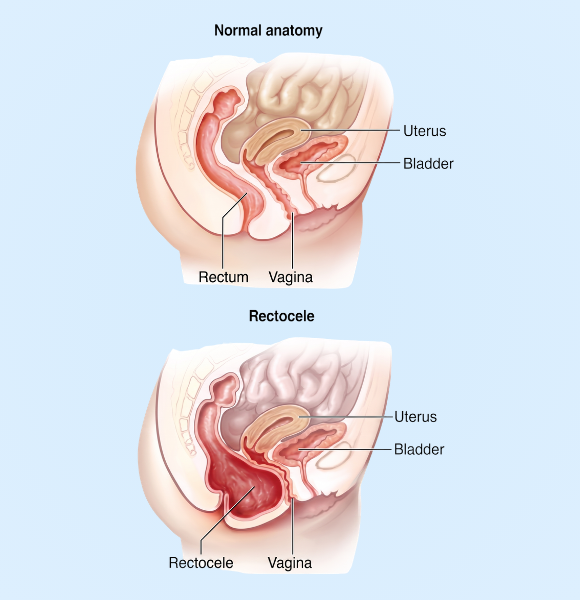
Symptoms

Sense of pressure/protrusion within vagina or feeling of rectum not emptied completely after bowel movement (Mild rectocoele)

Difficulty in passing stool, discomfort/pain during evacuation, intercourse, constipation (moderate rectocoele)

General sensation of falling out or falling down within pelvis

Vaginal bleeding, intermittent fecal incontinence, rectal prolapse
Causes
Childbirth – rapid births or babies weighing more than 9 pounds
Episiotomy
Use of forceps during childbirth
Hysterectomy or pelvic surgery
Treatment for Rectocele
Non-Surgical Treatment
Many patients with mild to moderate rectocele can benefit from non-surgical treatment, including:
- Pelvic floor exercises (Kegel exercises) to strengthen the pelvic muscles
- Stool softeners to reduce straining during bowel movements
- Hormone replacement therapy (when appropriate) to improve pelvic tissue support
- Vaginal pessary insertion to provide support for the weakened pelvic tissues
Surgical Treatment
- Posterior colporrhaphy
- Repair and strengthening of the rectovaginal septum
- Mesh repair (selected cases only)
- STARR Surgery (Stapled Transanal Resection of Rectum) – an advanced minimally invasive procedure for selected patients
STARR Surgery for Rectocele
- Minimally invasive procedure
- No external cuts, stitches or scars
- Day-care surgery
- Less pain and faster recovery
- Most patients resume normal activities within 3–4 days
Investigations Before STARR Surgery
- Defecography – to evaluate rectal function during bowel movements
- Colonoscopy – to examine the colon and rule out other colorectal conditions
Frequently Asked Questions (FAQs) – Rectocele Treatment
STARR surgery offers several advantages, including no external cuts or scars, minimal pain, shorter hospital stay, day-care treatment and faster recovery, allowing most patients to return to normal activities within a few days.
Recovery depends on the type of procedure performed. Most patients who undergo minimally invasive STARR surgery recover within 3–4 days, while complete healing may take a few weeks.
At MIRA Health Care – Advanced Speciality Surgical Centre, we offer comprehensive evaluation and personalised treatment for rectocele and pelvic floor disorders. Our experienced specialists use advanced diagnostic techniques and minimally invasive procedures, including STARR surgery, to help patients achieve faster recovery and long-term relief.